
Short History of the Church
When nearly 1500 German and French speaking foreign protestants first landed by the British as settlers on the hillside location of Lunenburg in June 1753, they had too much to do in building their first winter homes and fortifications for the town to attend to the building of a church. The first year, all the services were held in the open air on the Green where the present church and church parade now stand. The congregation consisted of Anglican, Lutheran, Presbyterian, Baptist, Roman Catholic and Mi’kmag. A minister had arrived with the settlers, the Rev. Jean Baptiste Moreau, a missionary sent by the society for the propagation of the gospel. Rev. Moreau spoke French, English and some German. He had previously been a Catholic priest and Prior of the ancient Abbey of Saint Mathiew, near Brest. He was the founding minister of St. John’s and died in 1770 and is buried beneath the church.
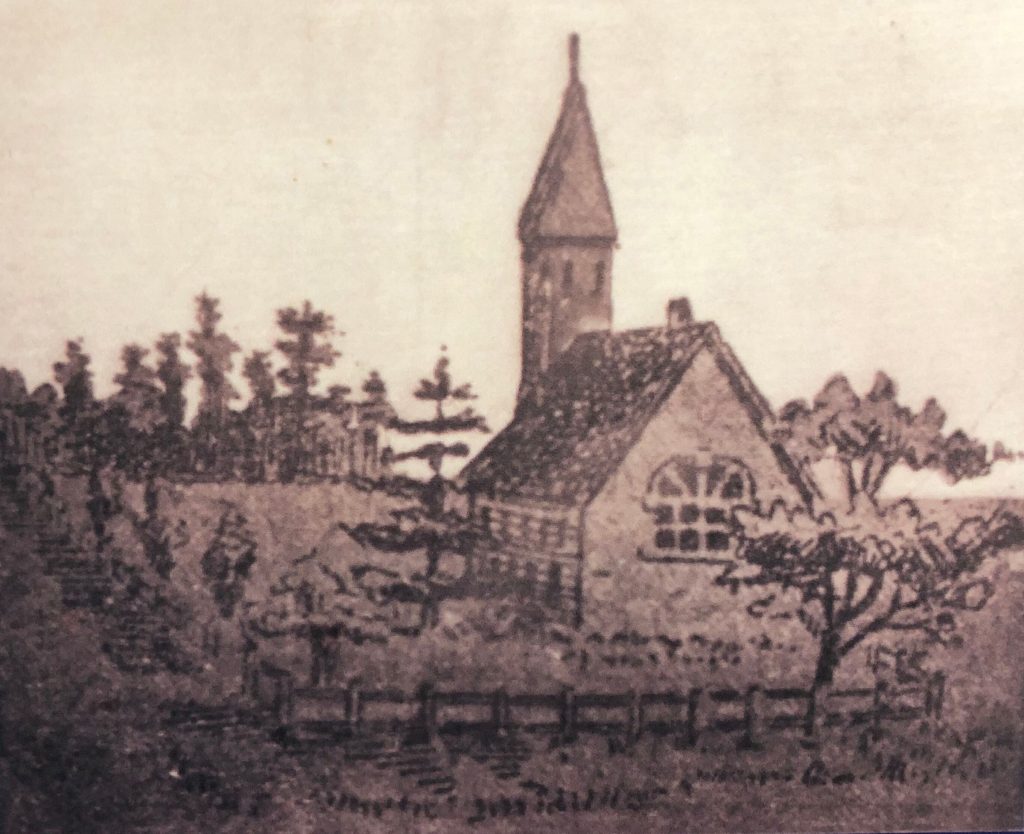
The First Church 1754
The building of the church began in 1754 with a grant of £470 from the authorities, the Lords of Trade and Plantations. It took a few years to complete and for the first 60 years it had no pews or heating. It was built in the style of a New England meeting house with a gallery on three sides. There were square windows, upstairs and downstairs, just like a Georgian house. It is believed that the frame of the old King’s Chapel in Boston, which by good fortune was being rebuilt in stone, was dismantled and shipped from Boston to Lunenburg on a British Man O’War. There was a huge three-deck pulpit towering up to the gallery in front of the altar with a round conical tower like those in Germany.
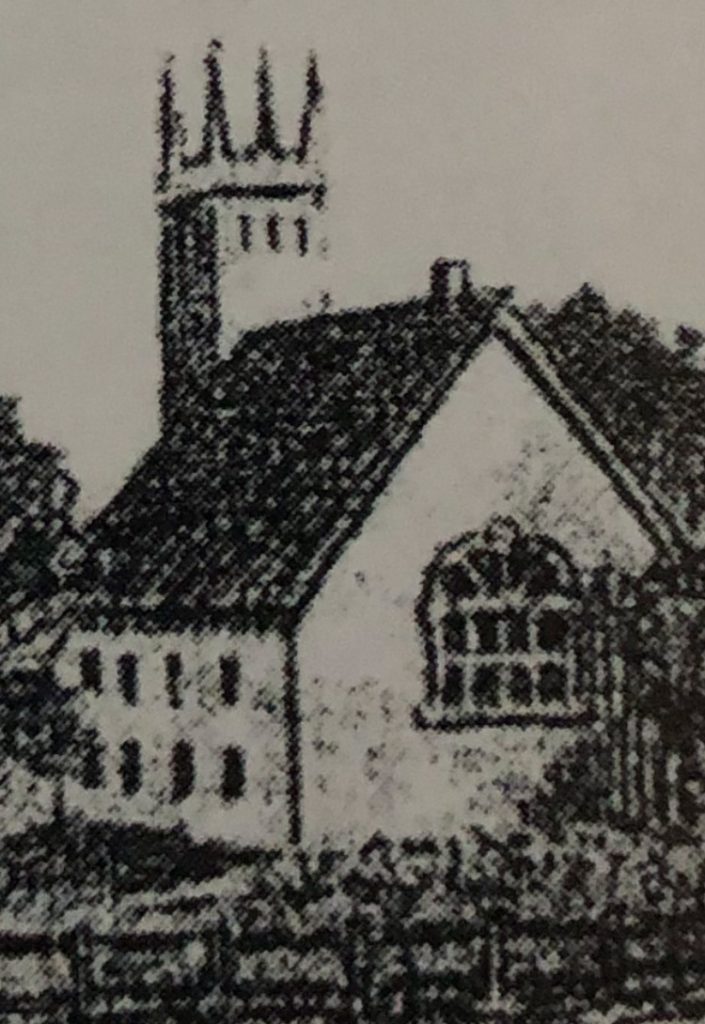
The New Tower 1840
A new square tower was built in 1840, designed by the local school master, William Lawson. It was 12 x 12‘ at the base, 70 feet high and had handsome pinnacles in the Gothic style. Much of the tower of 1840 still survives in the present tower, with its spacious porch and stairways. There was also a vestry room, where the bells are now rung, a singing pew and gallery space.
The Great Reconstruction 1871
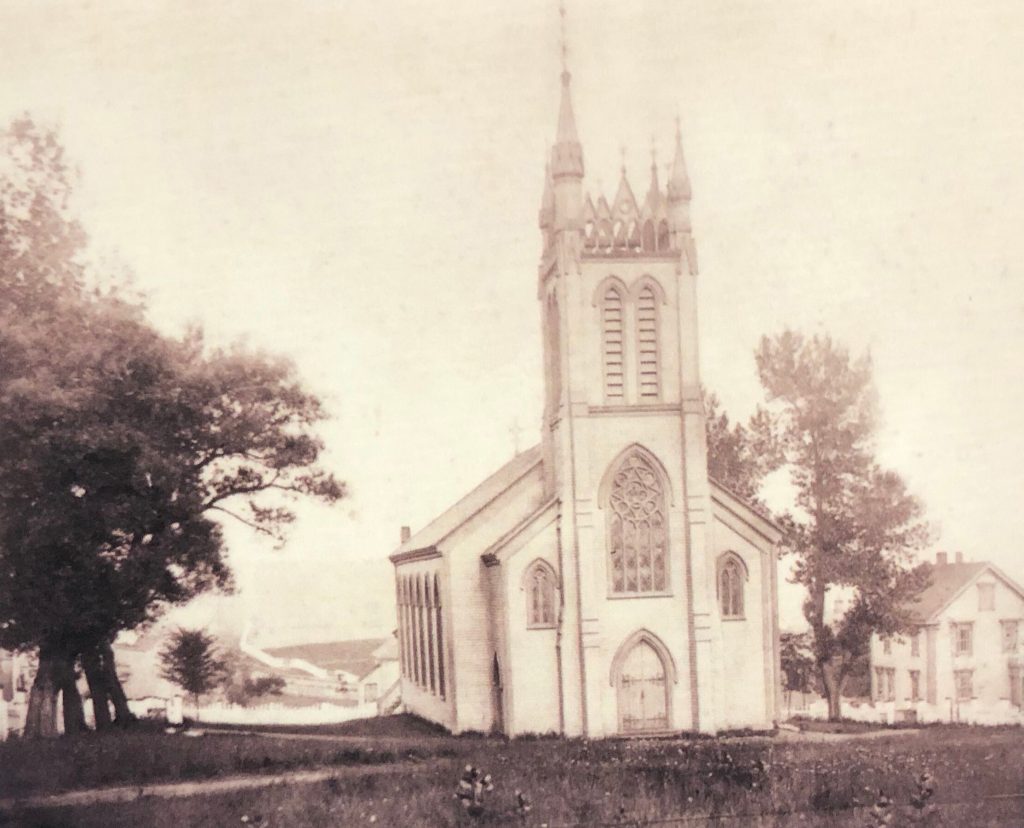
The original church was neat and compact and parishioners were not anxious to see any change. However, it was not large enough for the growing congregation. As a result, major changes began in 1871.
The flat plaster ceiling was opened, and the interior was gutted. As well, the windows were taken out. Teams of oxen then dragged the empty building with its tower attached approximately 25 feet to the west into the church parade. This allowed room for the addition of a chancel and sanctuary as well as extending the nave 10 feet.
Responsible for the Gothicization of the church, including the tower, was David Stirling, a gifted Halifax architect. Inside the church, the north and south galleries were removed and a vaulted roof was created by converting the ceiling supports into hammer beams. The Gothic interior was enhanced by replacing the rows of meeting house type windows with single 18 foot high lancet windows. Pews were installed in blocks flanking the centre aisle.
When the tower was renovated, the existing Gothic decoration was altered to match the nave and chancel, the ceiling of the latter being painted a deep blue and gilded with stars. At the same time, a large window was installed below the twin lancets in the bell tower. Glazed with quarry glass, this window illuminated the chime stand and the gallery. The reconstruction was finished in 1872.
A Committee of Carpenters, 1892
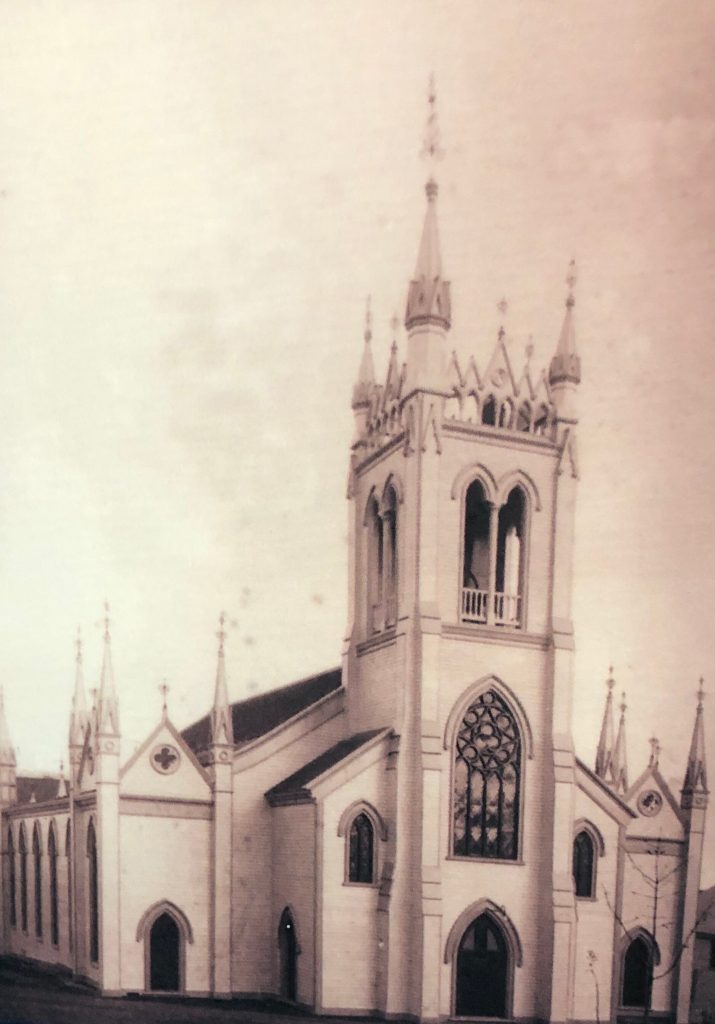
When the church again needed to be enlarged, a committee of five carpenters from the congregation was put in charge. Plans were drawn up by Solomon Morash, a master carpenter, and key figure in both church and town.
The side walls were moved out to provide the side aisles, and the main supporting timbers of the building were encased in marbleized wooden rectangular pillars. The roof supports were cleverly copied to match David Sterling‘s design for the main roof. The carpenters also enhanced the outside of the church by having 14 attractive pinnacles surmounting the buttresses around the perimeter of the building. These have since been boxed in.
The church today is an outstanding example of Carpenter Gothic architecture, wherein features traditionally rendered in stone are interpreted in wood. St. John’s is also regarded as a architectural centrepiece of the “old” part of the town of Lunenburg, which was designated a UNESCO World Heritage Site in 1995.
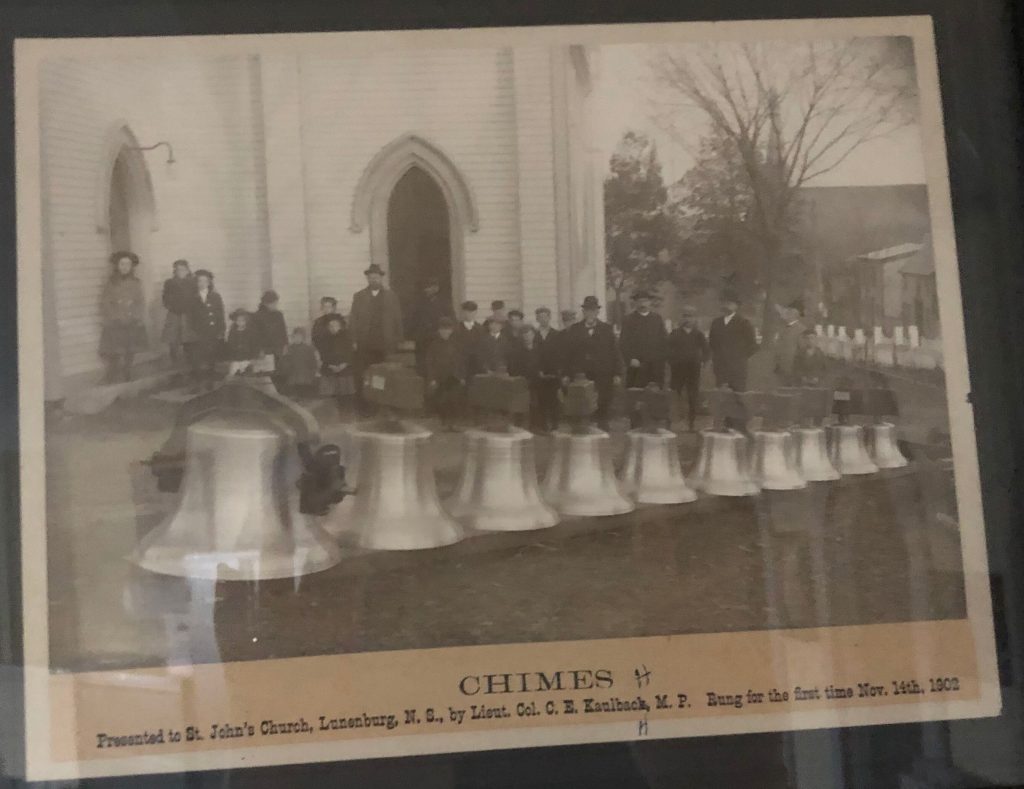
The Bells
The 10 chiming bells in the tower were given by Lieutenant Colonel C.E. Kaulbach, MP, in 1902. They were cast by a foundry in Troy New York. The largest bell, the tenor F, weighs 1800 pounds and is inscribed” Lord, may these bells forever be a tuneful voice o’er land and sea to call thy people unto thee”; this bell also served as a town‘s fire alarm. The chiming stand is in the upstairs gallery by the fisherman‘s window.
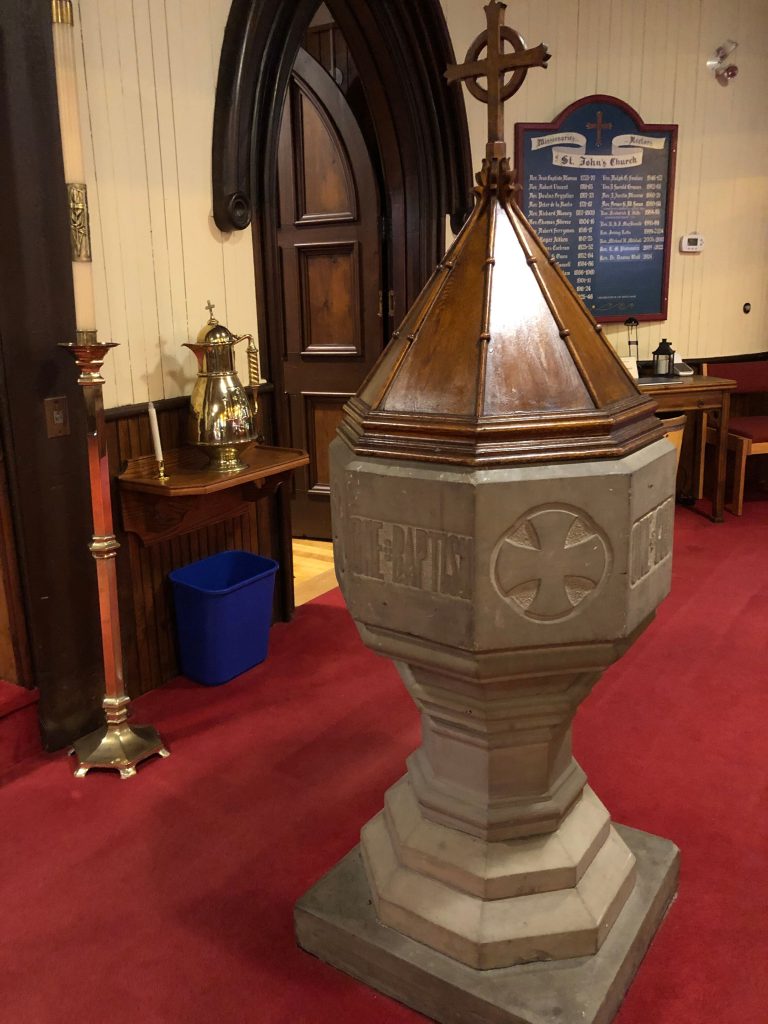
The Font
Rev. John Padfield, a Curate at St. John’s for 15 months (1869 – 1870), an assistant to Rev. Henry Owen (1852 – 1884), designed and gave the font to the church in 1903. The stone octagonal font was built by a Halifax stone mason by the name of Sanford.
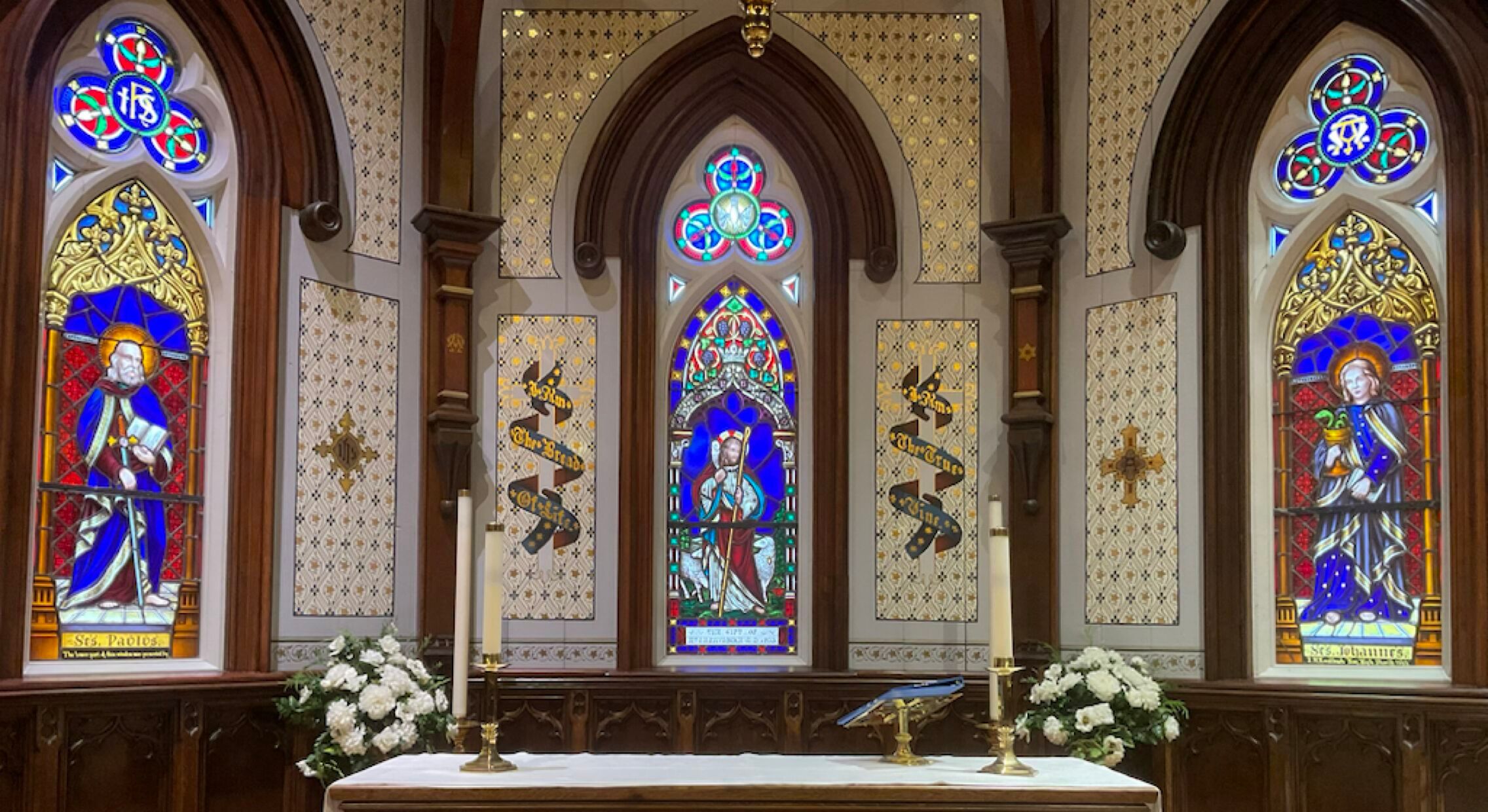
The Windows
The stained glass windows in the nave were installed between 1920 and 1960 and tell the story of Christ life: the Christmas cycle is on one side and the Easter cycle is on the other. Over the altar there are three windows: Christ the good Shepherd, in the center; St. John the patron saint of St. John’s; and Saint Paul, all from the mid-1800s. The fishermen’s window in the tower was dedicated in 1981 and presented in memory of the Adams, Knickle and Ritcey families. The fire of 2001 damaged the windows badly, melting the lead cames and scattering the glass. The parishioners laboriously collected the pieces, most of which were incorporated into the restoration of the windows by Norbert and Helga Sattler, of Sattler‘s Glass from the La Have River. The windows form a major part of the church and are used in teaching the gospel.
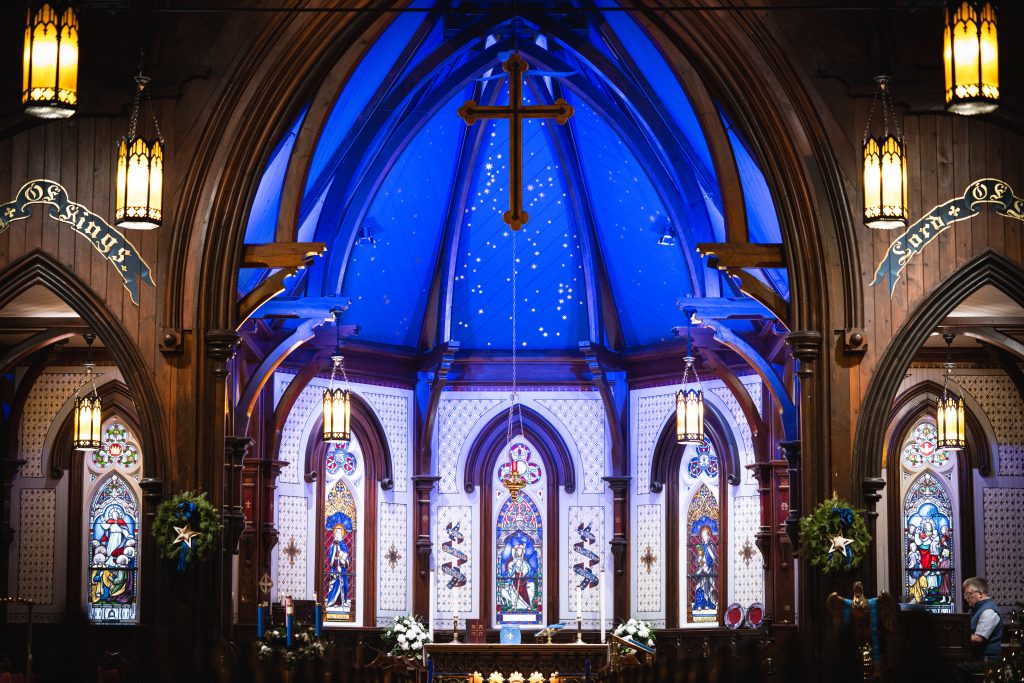
The Stars
At a glance, the 700 gold stars seem to be randomly placed on the deep sky blue of the Chancel ceiling. However, after the restoration of St. John’s, following the 2001 fire, Dr. David Turner, professor and astronomer at St. Mary’s University, Halifax, Nova Scotia, discovered that this was not the case. He found a prominent group of stars in the easternmost panel that represented Perseus, which does not swing through the eastern portion of our night sky at present. Dr. Turner worked out how the night sky in the northern hemisphere would appear over the past 2000 years and determined that the chancel stars depict the Lunenburg sky as it would have appeared at sunset on December 24, 1 BCE – the first Christmas.
The Altar
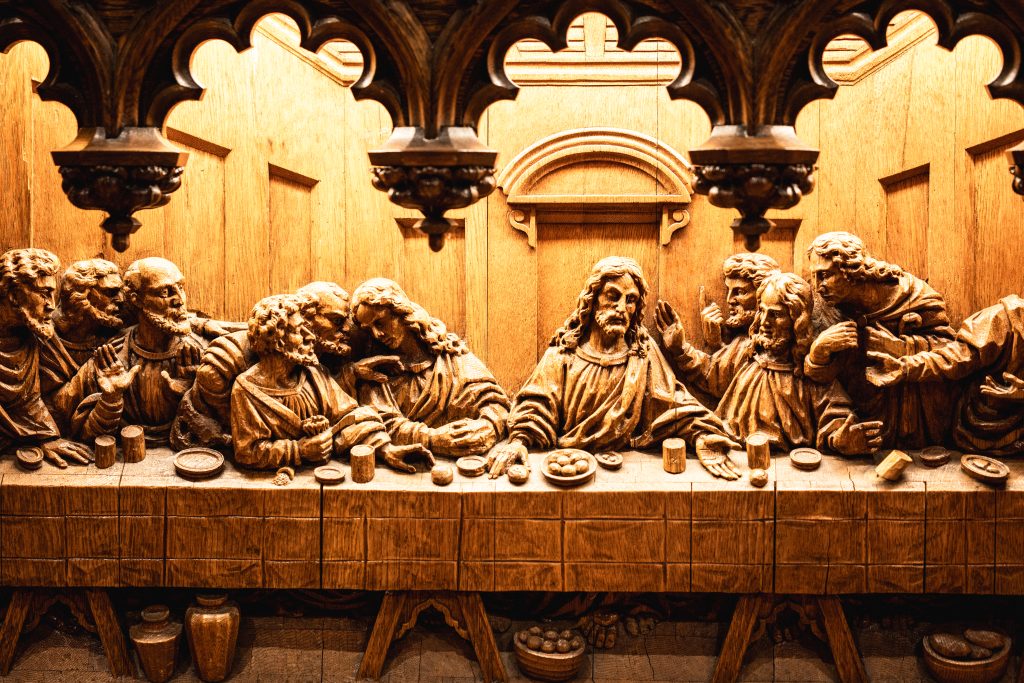
The beautifully carved oak table depicting a representation of Leonardo da Vinci‘s “The Last Supper”, was given by Henry and Margaret Zwicker in 1926 in memory of William Alexander Zwicker (1855 to 1924). The Zwicker name has been associated with St. John’s since the first foreign Protestant stepped ashore in 1753. Miraculously saved from the fire of 2001, the altar is still used today. A burn mark on the front right side continues as a reminder of the fire.
The Organ
At the centre of music and worship is the new Casavant organ, installed in 2005. Casavant Frères Limited of Saint Hyacinth, Quebec, had installed a two manual pipe organ in 1954, but it was completely destroyed in the fire of 2001. The 2005 Casavant organ, Opus # 3845, has 1816 pipes compared to the 1954 organ with 1296 pipes. The design of the new organ was inspired by the stop list of the previous 1954 Casavant organ, and well designed for the Anglican liturgy. In order to have the appearance of the organ relate to the architecture of the restored church, the façade pipes are stencilled using colours and decorative patterns found elsewhere in the church. This practice was frequently employed by North American organ builders when working on 19th century buildings and is an ideal way to integrate the organ visually into the Carpenter Gothic style of the restored church.

The Vinegar Bible
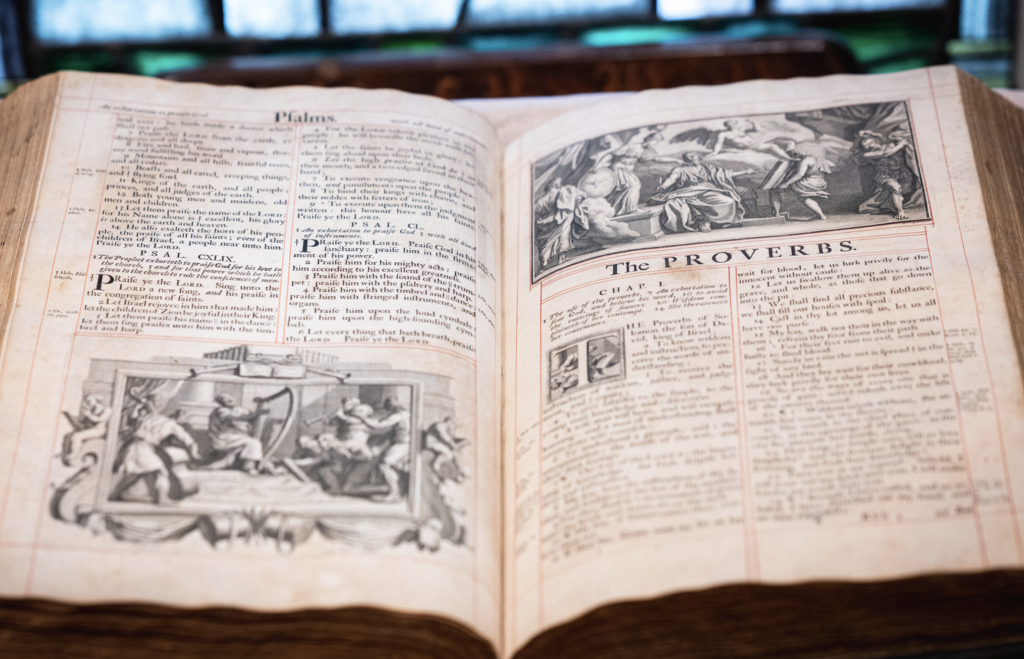
Printed by John Baskett in 1717 and given to Rev. Robert Vincent, missionary to St. John’s (1761 – 1765), the Vinegar Bible (so name as it contains a typographical error, using vinegar in place of vineyard in Luke 20:9, the Parable of the Vineyard). It was sold after Rev. Vincent’s death to the Lieutenant Governor of Nova Scotia, Michael Francklin. Mr. Francklin took it back to England after his tenure in Nova Scotia and used the end-papers to record his family history. In 2005 it was found in a private collection at the Pepys Library, Magdalene College, Cambridge, England and with the help of the province, returned to St. John’s Church in 2008.
The Interpretive Centre
The interpretive centre holds the church archives as well as displaying windows that were discovered following the fire and features a glimpse into the crypt. Church historians, assisted by the Rectors and parishioners, have chronicled and overseen the collection of the church records since the early days of St. John’s. Currently, the Heritage committee, which consists of volunteers from the parish and community and with the guidance of the Nova Scotia archives, is conserving the materials in acid-free containers, and cabinets, building an inventory of every item. The St. John’s archives were granted institutional status in 2014.
The Crypt
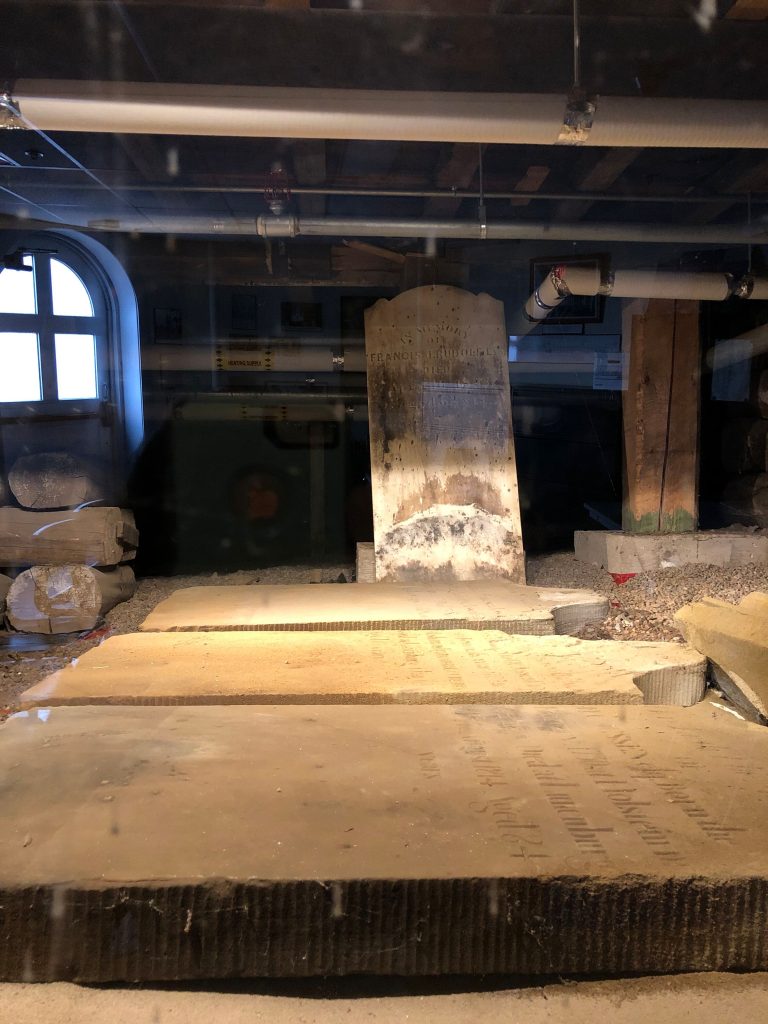
Underneath the floor of the church are the graves of 20 of the early parishioners, including the first minister, the Rev. Jean Baptiste Moreau, and two other early ministers, Rev. Bryzelius and Rev. Shreve. There is a brass plaque on the floor in front of the Chancel naming those buried there. Down the stairs to the left of the pulpit, the crypt can be viewed through a window in the interpretive centre.
The Church Parade
The church was not consecrated until 1826 because originally it had no title to the strip of common land upon which it stood. The entire square, or parade, was granted to the church in 1820 by the governor of the province.
The Parish Hall
The building across the church parade was built in 1775 to serve as the Lunenburg courthouse. It was purchased by the parish of St. John’s in 1904 by public tender, extended by 30 feet, and began its new life as a parish hall and Sunday school. It contains one of the town’s treasures, a Royal Coat of Arms of George III, the oldest mural in Nova Scotia.
